What Ferrari Luce Could Tell Us About the Future of Design in the AI Era?
I guess you have already noticed the recent announcement of Ferrari Luce, Ferrari’s first all-electric car. Apparently, a lot of people didn’t like the new design, or at least it wasn’t what they expected. What’s interesting is that the reactions were not just verbal. This time, a lot of people used generative AI tools to create images of what they believed Ferrari should have designed. It’s not the first time this has happened with a newly introduced design by a company, but not at this scale or intensity. I believe this reaction reveals an unexpected way in which AI might affect how design is practiced in the future.
Does it have that AI-generated smell?
If you read the interviews with the team behind Ferrari Luce, you’ll quickly realize that this car was intentionally designed to be different from previous Ferrari models.
Flavio Manzoni, Ferrari’s Chief Design Officer, was explicit about it:
This car is completely different from anything that has been done in Ferrari history.”
Jony Ive of LoveFrom put it this way:
It’s a different manifestation based on some of the beliefs around simplicity and the inherent beauty of something.
Personally, I don’t find the claim that Ferrari Luce doesn’t look like a Ferrari very convincing. The interior design pays homage to the Dino 206 and 246, while the exterior design has a number of similarities to Ferrari’s Purosangue SUV, with its lifted mid-section and thin horizontal headlights. Jony Ive and Marc Newson’s LoveFrom studio designed a car that is indeed different from previous Ferrari models, but still includes enough references to earlier models for those familiar with Ferrari’s heritage.

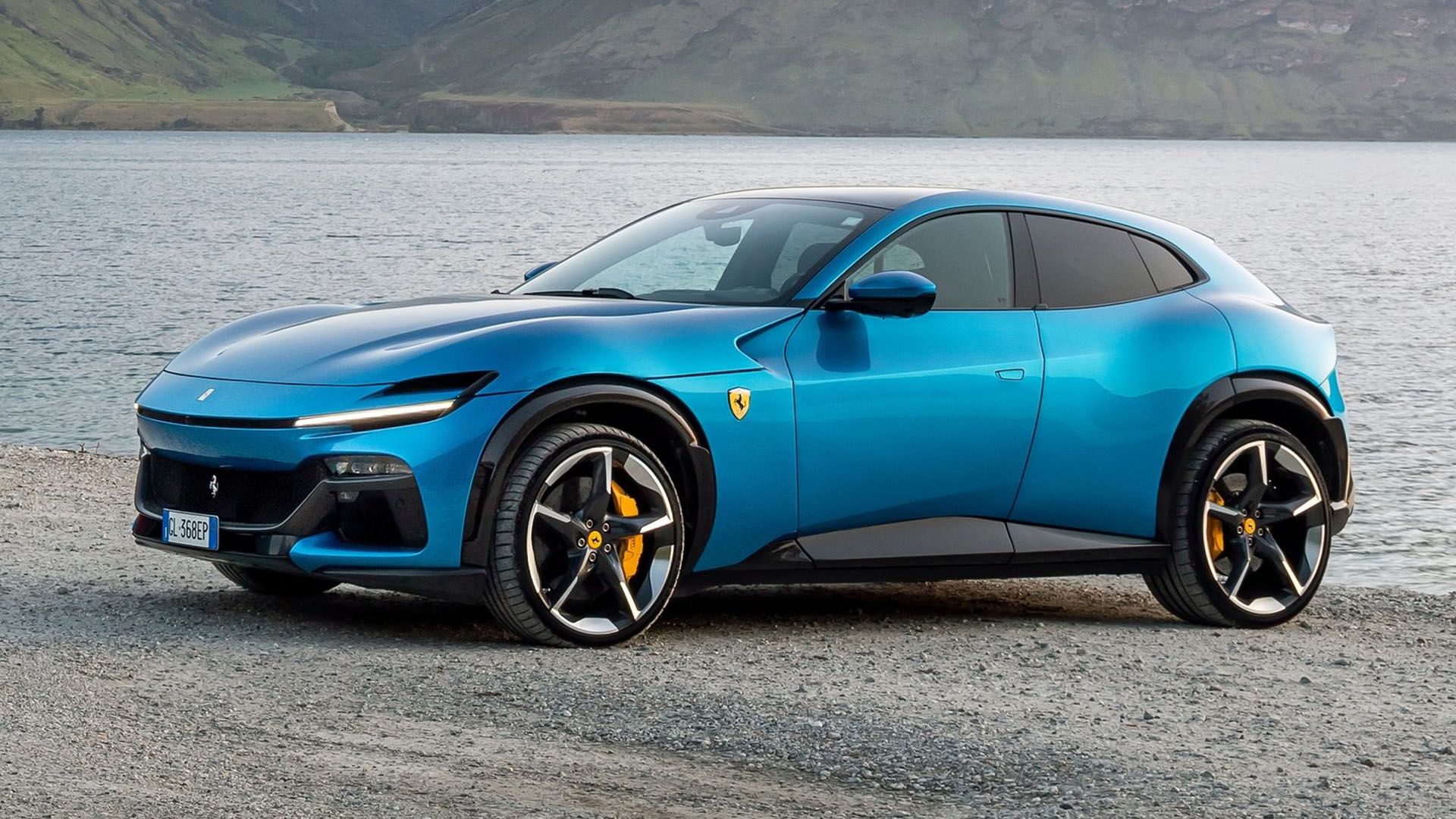
Another thing to note is that Ferrari is not in the business of selling cheap, efficient cars that are easy to repair and maintain. Ferrari’s cars are collector’s items, built for a market that values uniqueness and exclusivity. Design, inevitably, becomes a key factor in that pursuit. By collaborating with LoveFrom, Ferrari’s Luce became not only its first all-electric car, but also the first Ferrari officially shaped by a legendary designer outside the company’s traditional design structure. In my view, that alone makes Luce a collector’s item, even if that was not Ferrari’s intention.
I don’t know whether LoveFrom’s team used AI in the design process, but the presentation made it clear to me that this was a design driven by humans. So, like it or not, one thing you can’t say about the new Ferrari Luce is that it looks as if it was designed with one of the generative AI tools people used online to criticize it. I’m not saying that using generative AI for design is always bad. For many design problems, it is good enough, or even better than a human-driven solution.
However, for some categories of products and design problems, a solution that looks predominantly AI-generated, "AI-slop" as some people increasingly describe it, will carry a negative connotation associated with cheapness, laziness, or sloppiness. In these cases human designers and decision-makers will attempt to navigate away from, designs that could associated with these characteristics, even if no AI was used at all which might seem less than ideal.
At the same time, I believe the need to avoid this "AI-generated" derivative look, will indirectly force design teams to look deeper to the fundamental values and characteristics of good design, be more innovative, daring and less tempted to blindly re-iterate the same patterns and stereotypes. Car design is one of the many design fields that have suffered a lot from this tendency.
Of course, I don't want to imply that AI will affect design only in the ways I described above. I expect AI to change design in many other ways but that's a separate topic. To me Ferrari Luce stands as an example of design aims for deeper, more meaningful design values instead of becoming another familiar but expected derivative variations the past that AI can now do almost instantly.